Give or treat yourself to a subscription to Boats in Motion print + digital and for only 39 euros a year you get the magazine at home plus read it on your PC, smartphone and tablet. With a sea of advantages.
Dorothy Levitt, born in 1882 in London, was one of the boldest and most pioneering figures in the world of motor sports in the early 20th century. Not only was she one of the first women to earn a reputation as a driver, but she also played a significant role in improving the safety and perception of women in the transportation industry. Her remarkable career was a testament to determination, innovation, and defiance of the social conventions of the time.
Origins
Dorothy Levitt was born into a modest family and, from an early age, was distinguished by her passion for motor vehicles. In 1903, at the age of 21, she began participating in motor racing, an activity dominated predominantly by men. She became known for her driving skills and racing presence, becoming one of the first women to race in major events.
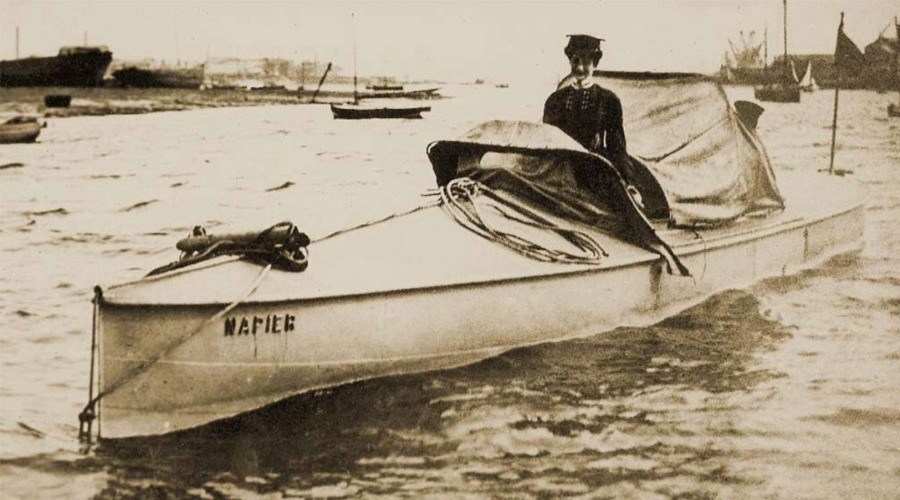
The Napier, a boat with which he won the first Harmsworth Trophy.
Dorothy Levitt: from cars to boats
Although most of her career focused on automobiles, Dorothy Levitt was also a pioneering figure in the fledgling world of motorsports, contributing significantly to its evolution. By the time Dorothy Levitt was active, speedboat racing was beginning to gain popularity. It was a time when the combustion engine was revolutionizing the world of transportation, and Levitt found herself at the forefront of this field as well, although she was not as famous as she was in motor racing. His connection to powerboating stemmed from his focus on motorized vehicles and speed, two themes that linked both cars and boats of the time.
In 1905, Dorothy Levitt participated in a series of water-based competitions; her innovative approach to driving extended to boats as well, and she was among the first to use advanced techniques to improve speed and safety on the water, just as she had done in the automotive field. Among his major contributions was a focus on the importance of safety on the water, a topic that was only beginning to be explored in those years. Levitt competed on water by actively promoting the use of life jackets and safety devices that could have saved the lives of powerboat drivers-a concept that, at the time, was still relatively unknown.
From the speed record to the real yacht
Although her career was relatively short, the figure of Dorothy Levitt made a lasting impact. Fatally attracted to all things speed, Levitt also successfully tried her hand at powerboating, where she set a world record on the water (19 knots) during the first of the Harmsworth Trophy, which she won aboard a 12-meter steel boat with 75 horsepower and a three-blade propeller.
In 1903 she also won two competitions in France (Gaston Menier cup and Championship of the Seas), as well as the Cowes event in England, which even earned her an invitation aboard Edward VII’s royal yacht for a day.
Later, abetted by the onset of health problems that would lead to her untimely death in 1922, she left racing and began writing books and collaborated as a journalist with multiple newspapers, in which she obviously covered engines.
Powerboats, its stories, from small open to motoryachts. Sign up now for our free newsletter and receive the best news selected by the editorial staff each week. Enter your email below, agree to the Privacy Policy and click the “sign me up” button.
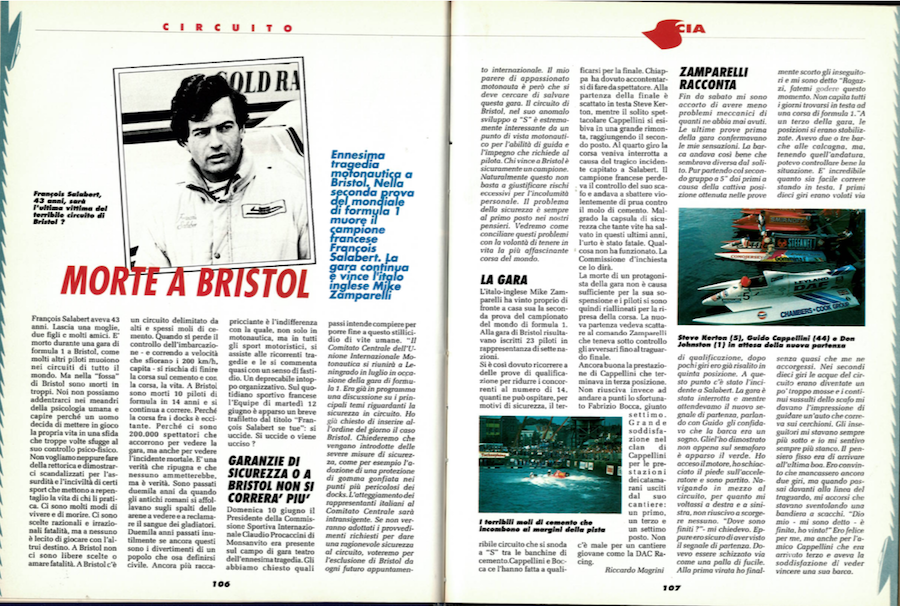
Welcome to the special section “BAM 35 Years.” We are presenting “cult” articles from the Motor Boats archive, starting in 1990. A journey through time among stories unobtainable today, even in the great sea of the internet! A dive into
Welcome to the special section “BAM 35 Years.” We are presenting “cult” articles from the Motor Boats archive, starting in 1990. A journey through time among stories unobtainable today, even in the great sea of the internet! A dive into
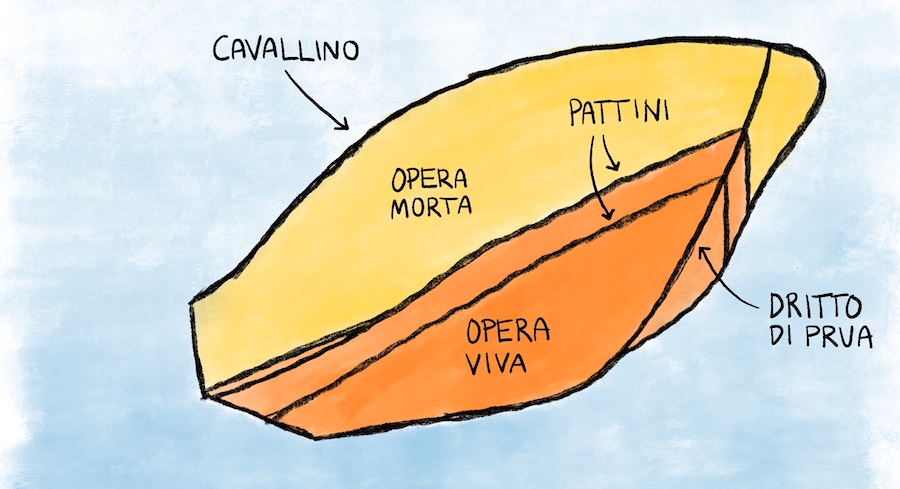
When we write our tests, we talk about live opera, dead opera, skids and deadrise. All these names, to the most experienced are clear, but not everyone is familiar with the technical jargon. Yet these terms are fundamental to understanding
Welcome to the special section “BAM 35 Years.” We are presenting “cult” articles from the Motor Boats archive, starting in 1990. A journey through time among stories unobtainable today, even in the great sea of the internet! A dive into
Gestisci Consenso Cookie
Per fornire le migliori esperienze, utilizziamo tecnologie come i cookie per memorizzare e/o accedere alle informazioni del dispositivo. Il consenso a queste tecnologie ci permetterà di elaborare dati come il comportamento di navigazione o ID unici su questo sito. Non acconsentire o ritirare il consenso può influire negativamente su alcune caratteristiche e funzioni.
Funzionale
Always active
L'archiviazione tecnica o l'accesso sono strettamente necessari al fine legittimo di consentire l'uso di un servizio specifico esplicitamente richiesto dall'abbonato o dall'utente, o al solo scopo di effettuare la trasmissione di una comunicazione su una rete di comunicazione elettronica.
Preferenze
L'archiviazione tecnica o l'accesso sono necessari per lo scopo legittimo di memorizzare le preferenze che non sono richieste dall'abbonato o dall'utente.
Statistiche
L'archiviazione tecnica o l'accesso che viene utilizzato esclusivamente per scopi statistici.L'archiviazione tecnica o l'accesso che viene utilizzato esclusivamente per scopi statistici anonimi. Senza un mandato di comparizione, una conformità volontaria da parte del vostro Fornitore di Servizi Internet, o ulteriori registrazioni da parte di terzi, le informazioni memorizzate o recuperate per questo scopo da sole non possono di solito essere utilizzate per l'identificazione.
Marketing
L'archiviazione tecnica o l'accesso sono necessari per creare profili di utenti per inviare pubblicità, o per tracciare l'utente su un sito web o su diversi siti web per scopi di marketing simili.